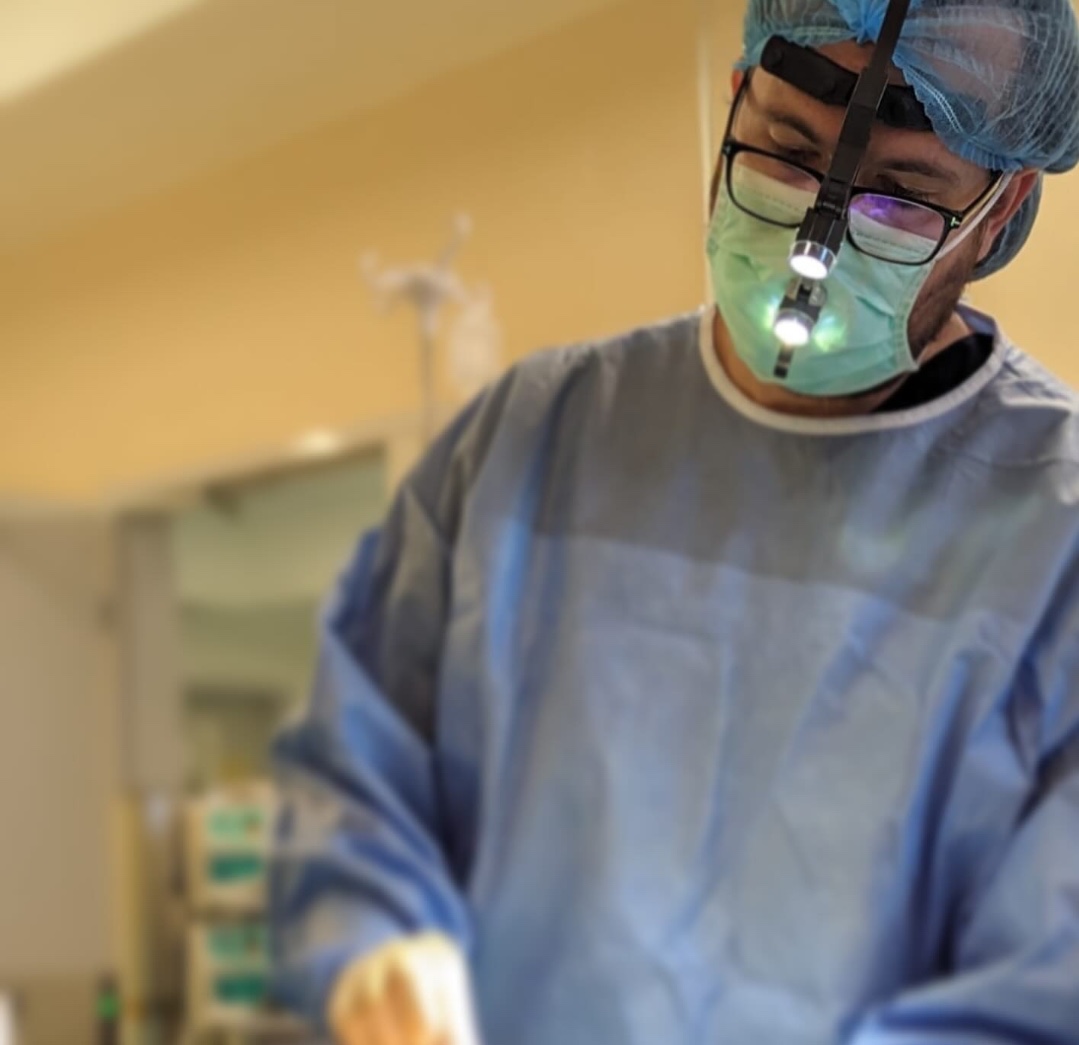
I’m pleased to introduce you to my campaign: #frumuseteaesanatate. As a surgeon, and also as a lecturer at the University of Medicine in Cluj, I want to help shape a sound view of a concept that is abstract, yet so present in our lives: beauty. There are many excesses in the way we relate to aesthetics. I want to set a sound, well-informed direction in this field.
The second episode of the #frumuseteaesanatate campaign is about perfection and how we relate to it.
QuestionHarmony doesn’t mean perfection, does it?
Dr Dinu Dumitrașcu: In episode 1 of the campaign we talked about charm. There is a charm that makes us who we are. I actually explain to my patients, in my practice, that harmony means imperfection. We want to be perfect, to have perfect results… But beauty can also lie in imperfection. Of course, when someone comes for aesthetic treatment, I don’t imagine they’d want us to create a flaw just to look natural.
QuestionNo one is perfect, and it’s important to say so in this Instagram era, this social-media era in which the pressure keeps piling up. What does balanced mean… when you walk into the practice of a doctor who specialises in aesthetics?
Dr Dinu Dumitrașcu: What does a balanced result mean? We surgeons have certain techniques, and those techniques indirectly lead to certain results; because the procedures are repeated, the final results can sometimes end up looking quite similar from one person to another. But that isn’t a bad thing, because if there is only one ideal of beauty, that is, if the upper lip, as I said before, should be in the same ratio to the lower lip, then in a sense every beautiful lip should be like that, rather than the upper lip being larger or the lip being too wide. So a harmonious face, or balance in beauty, is given to us to some extent by the studies of those who came before us in aesthetics: respecting certain ratios that have proven pleasing to the eye.
QuestionHow much does the individuality of a case matter within these ratios of perfection?
Dr Dinu Dumitrașcu: It’s very important to take the person’s individuality into account. Even if the technique of a minimally invasive procedure or an operation is identical, small details and small nuances can make the difference, so that NOT everyone looks the same, not every nose looks the same, not every breast augmentation looks the same, but each one is right for that particular person.
QuestionDoes a good surgeon take the patient’s personality and identity into account?
Dr Dinu Dumitrașcu: Absolutely! Otherwise, how would you plan the result of a rhinoplasty for someone with a longer face, a more oval face, a rounder face or a squarer face? But here we can talk about something more: the signature of a dedicated surgeon.
QuestionWhat is the surgeon’s role in society?
Dr Dinu Dumitrașcu: Here I’d like to bring a little clarity and point out that plastic surgery is a very complex medical specialty. The tip of the iceberg that people talk about, that everyone knows, the idea plastic surgery is associated with, is aesthetic surgery: healthy people agreeing to be unwell for a short time. Unwell, because recovery itself is like an illness, in order to be more beautiful and to gain emotional well-being, which is a very important aspect. So aesthetic operations can greatly change a patient’s emotional well-being. But aesthetic surgery, perhaps given the complexity of plastic surgery as a whole, accounts for about 10%, because plastic surgery is reconstructive surgery, it’s microsurgery, which joins blood vessels, lymphatic vessels and nerves under the microscope, it’s burns surgery, it’s hand surgery. So it’s a very complex subject, a universe much wider than the one we perceive.
Being a plastic surgeon is an extremely complex and very broad profession which, unlike other surgical specialties, deals with the whole body. You don’t work on just one small part. The whole body, at the surface; a plastic surgeon rarely goes very deep into the body, but works across all of it. Plastic surgery developed over time, and its first role was reconstructive: rebuilding the nose after amputation in the medieval period, reconstruction after injuries suffered, for example, in battles and tournaments, reconstruction after all kinds of trauma. Unfortunately for society, but fortunately for plastic surgery, the great wars always brought a huge boom in development, especially the First and Second World Wars, where injuries of a severity never seen before in history drove the development of new techniques. These genuinely helped people a great deal and gave them back an almost normal life; otherwise they would have been completely isolated from society and discriminated against. With this experience of working with tissues and reshaping the body and face, it was only a step to aesthetic surgery. We can say aesthetic surgery began tentatively around 1900, with the first rhinoplasty at the start of the twentieth century, or the first tummy tuck, but I would say true aesthetic surgery began after the 1950s and 60s. It developed very quickly; Brazil was a very strong centre, with a great professor, Pitanguy, whose students went on to America and started developing the field there. Since then it has kept developing into what we see today. Sometimes, even to excess.
QuestionAnd the ethical role?
The ethical role of a plastic surgeon is to educate and inform people about what an aesthetic procedure means, what psychological changes it can bring, and the fact that an operation won’t solve your psychological problems or your problems at home… so there are many aspects to it.