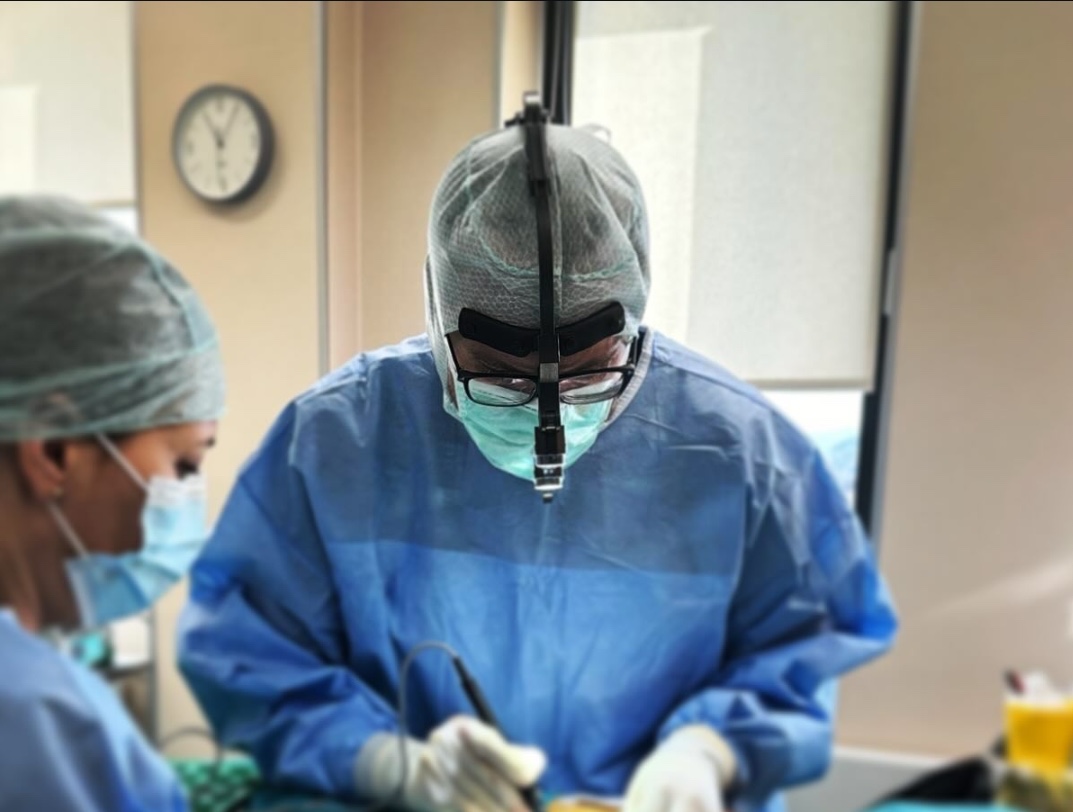
I’m a surgeon and also a university lecturer. I’ve started a campaign that is, in a way, my mission! #frumuseteaesanatate is a campaign about the concept of beauty and about relating to it in a healthy, balanced way, with style and responsibility.
The fifth episode of the #frumuseteaesanatate campaign is about how the signs of ageing appear.
QuestionHow do women age and how do men age? Is there a difference in how we perceive and relate to ageing?
Dr Dinu Dumitrașcu: Yes, unfortunately it’s a little unfair to women! It seems that the signs of ageing in women appear around perimenopause, while in men they start to show somewhere after the age of 50. So there would be a gap of 10–15 years between the moment age starts to show on a woman and on a man. We know two situations, two expressions: you haven’t seen someone for a long time and you say, she hasn’t changed, she looks just like she did at school; but there’s also the other situation, where you see someone, then see them again only after a year, 12 months, and you say goodness, how he’s aged, he looks five years older, what’s wrong with him, is he having problems? Because there really is a tipping point: you don’t notice ageing, and then it sets in suddenly.
QuestionWhen do the first signs appear?
Dr Dinu Dumitrașcu: In women, especially around the face, at perimenopause; in men, after the age of 50. How can this information be used? Knowing this, you might look at the people around you and see that, indeed, around these ages signs of ageing start to appear on the face, signs that are similar but also slightly different. For example, in men the cheekbones start to flatten; in women jowls appear along the jawline; in men the brows drop more noticeably, perhaps also because their tissues are heavier; and in both, bags start to appear under the eyes. Men have a big advantage, because men with beards can hide it very easily. For women… it’s harder to cover these signs of ageing.
QuestionLet’s say we’re approaching 40. Do we intervene or not?
Dr Dinu Dumitrașcu: It’s much simpler than it seems in theory, where it looks very complex, with so many factors to weigh before you can decide. In fact, it’s very simple: you look in the mirror, you look at a photo, and you know yourself when the moment comes to do something. The moment you no longer recognise yourself in the image you see is probably the moment to intervene, if you want to. If signs of ageing appear and you leave them without intervening, they become harder and harder, or even impossible, to correct. So if someone wants the passing years not to show on their face, it’s best to start early, when the first signs appear. Imagine two identical twins ageing side by side, one of whom has procedures and the other doesn’t. Ten to fifteen years after this hypothetical starting point, the twin who had procedures will look much younger, because they prevented ageing, compared with the twin who didn’t; for the latter it will be very hard and expensive, really very hard, to bring them back to even resembling the other twin, who started preventing the signs of facial ageing much earlier.